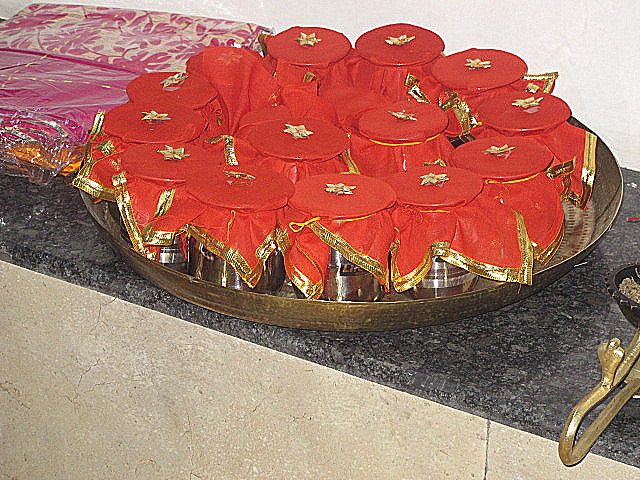
Once again, for the third consecutive year, I am in India for Diwali. I still haven't learned to speak Hindi though my smart phone, a Samsung Note 3, is full of Hindi aps which I should be learning, so, hopefully, if I survive to use my return ticket May 5, 2015, I will be able to say more than hello, thank you and goodbye. One of the aps must be a military or law enforcement Hindi program because it has such tidbits as, "stop or I'll shoot," and other important commands of that nature. Diwali, the "festival of lights," which is, I believe, the most important of Hindu festivals, falls very shortly after the celebration of Navratri, which honors the Hindu goddess Durga, in all of her manifestations. Diwali celebrates the victory of good over evil, light over darkness, and hope over despair. Each of the five days is dedicated to a special celebration. Diwali is a time when people clean their home, buy new clothes, exchange gifts with family and friends and make offerings ( puja ) to the gods. Family feasts take place and lights, candles, everywhere, there is light. As night falls, firecrackers boom until the early hours of morning. Diwali is a major shopping period, corresponding to Christmas in Western countries. I've written in previous blogs about this major Hindu celebration. The links are below. http://rnsane.blogspot.in/2013/11/diwali-2013-november-2-2013.html#links http://rnsane.blogspot.in/2012/11/getting-ready-for-diwali-november-11.html#linksT To all my Hindu, Jain and Sikh friends in India and throughout the world - and to all others who may celebrate Diwali, I send my heartfelt wishes for a joyous and wonderful festival of lights with blessings from your gods and goddesses.
This is my third Navratri in India and, each year, I learn something new about this nine day Hindu festival, honoring the Mother Goddess, Durga. Today, I read that, for each of the nine days, the Goddess is draped in a different colored sari and her devotees wear specific colors.
Last year, I wrote, at length, about Navratri, on my blog. I don't think I could improve on that so I am giving you the link, in case you didn't read it or would like to read it again. http://rnsane.blogspot.in/2013/10/navratri-nine-day-hindu-celebration.html#links I still have not made it to Gujarat for Navratri, a goal I set for myself two years ago. If I get back to India next year, as soon as I arrive, I am going to make reservations to spend, at least, two days of the weekendof Navratri in Boroda so I can see the garba and dandia dances, with the men and women in their beautiful costumes. I have yet to visit Ahmedabad and it is only an hour's flight from Mumbai where I usually stay.
There is still so much I want to see and do in India but, as I celebrate my 70th birthday October 3rd, I wonder just how much time I have left to accomplish all that remains on my extensive bucket left. If there is a "next life," I hope that list will accompany me! If you all haven't heard it on the news, this amazing country just put a spacecraft in orbit around Mars for the unbelievable cost of $74 million dollars, about a tenth of what it cost the U. S. to accomplish the same thing. Congratulations to all involved in the Indian space program. Thanks to bing images, domain free, for the photos used today. http://www.india.com/top-n/navratri-special-9-colours-to-wear-on-each-day-of-the-festival-and-their-importance-154941/
Spending so much time in India, I've had the pleasure of experiencing many
of its religious and cultural celebrations and holidays. Raksha Bandhan is one
of my favorites and I wish we had a counterpart in the United States. It is a Hindu
festival which celebrates the love and duty between brothers and sisters. It
has also come to celebrate any such devoted relationship between men and
women who are not related biologically.
Raksha Bandhan is an ancient festival, celebrated worldwide by Hindus, Jains,
and many Sikhs. On the full moon day ( Shravan Poornima ), a sister ties a rakhi
( sacred thread ) around her brother's wrist, symbolizing her love for him. She
offers prayers for his well-being and for his life-long vow to protect her. The brother,
then, affirms his promise to protect his sister. It is a festival which affirms family ties.
Preparations for Raksha Bandhan may begin well in advance. Many sister weave
the rakhi for their brothers. Some keep it simple with colorful string. Others add
amulets and stones
This symbolizes the sister's love and prayers for her brother's well-being, and the brother's lifelong vow to protect her.[10][11] The festival falls on the full moon day (Shravan Poornima) of the Shravan month of theHindu lunisolar calendar.[12]
Raki bracelets, Bing Images, Domain free
The ceremony, typically, is performed in the morning, in front of parents and other family,
with a diya ( lighted candle ), rotated around the brother's face, while the sister prays.
After prayers, the sister applies a mark ( tilak ) to her brother's forehead. Next, the
sister feeds the brother some sweets from a rahki tray.
There are many websites and resources available if you would like to know more
about this special Hindu festival. It is one of my favorites.
I love the jewelry in India. During my 15 months of living there recently, I bought a few dangly earrings ( costume jewelry only, of course ) but I so enjoying wearing them. I was once invited to a Hindu celebration called Karva Chauth, where women fast from sunrise to the rising of the moon, to pray for the safety and longevity of their husbands. The ladies gather together, dressed in their best clothing, often their wedding finery. beautiful jewelry, and make up and go through rituals, chanting and rituals together until moonrise when their husbands arrive to give their wives water to break their fasts. It was a most beautiful event and the women were as colorful as a field of flowers in bloom. I was honored to be invited to participate. And, no, there is no reciprocal day of fasting for the safety and longevity of the wives.
This is the second year that I have been in India for Navratri, which means "nine nights". This important Hindu festival, which takes place twice a year, at the beginning of summer and the beginning of winter, honors the goddess, Durga, in all her nine forms. The name "Durga" means "the remover of the miseries of life" and Durga is considered the Divine Mother in the Hindu religion.
DURGA
The beginning of Navratri is determined by the lunar calendar. The nine days
are celebrated differently in various parts of India. The nine days are divided
into three sets of three to adore three different aspects of the Divine Mother.
In the first three days, Durga, also know as Kali, is revered as a
spiritual force, that destroys evil and grants boons. Kali is the "fearful and
ferocious form of the mother goddess."
KALI
In the second three days of Navaratri, another manifestation of Durga
is adored. As Lakshmi,she is the goddess of wealth and prosperity, both
physical and spiritual. In Hindu households, she is worshipped daily
"but October is her special month". Lakshmi, the wife of god Vishnu, is
the epitome of beauty. She is pictured sitting on a full blown lotus, with a
lotus bud in her hand, Gold coins fall from her four hands which represent
the four ends of human life - dharma or rightousness, "kama" or desires,
'artha" or wealth, and "moksha", liberation from the cycles of birth and death.
LAKSHMI
The last three days of Navratri are devoted to worship of the Divine Mother
as Saraswati, the goddess of wisdom and arts. She is worshipped for divine
knowledge and represents the free flow of wisdom and consciousness. Her
four hands represent the four aspects of human personality in learning: mind,
intellect, alertness and ego.
SARASWATI
For many Hindus, Navratri is a time of prayer and fasting. No meat, alcoholic
drinks, grains, wheat, garlic or onions are eaten in many households. Many
people have only milk and fruits during this nine day period.
Navratri is also considered an auspicious time for new undertakings and
ventures.
The nine day period is also celebrated in many parts of India, especially the
state of Gujurat with music and dance. Garba and Dandiya Raas originated
as dances in honor of Durga. The dance represents a battle between Durga
and Mahishasura, the demon king. Dancers whirl about and move their
arms and legs in a prescribed choreography to music, usually enhanced
by the dhol, a percussion instrument, as well as the dolak and tabla.
The sticks used in the dandiya represent the swords of Durga. Women
often dress in beautiful ghagra choli and dupattas, some wearing a
different color every day and they use their finest jewelry. Men have special
turbans and kedias.
The garba consists of hand and feet movement and is usually danced before
Aarti, a ritual of worship of the goddess, Durga. Garba can be danced by any
number of people.
Dandiya Raas is usually danced ater Aarti and it is a dance of merriment.
Most dandiya steps require two people and men and women dance in two
circles, one going clockwise, the other counter clockwise. To a four beat
rhythm, the dancers hit the sticks at the same time. Contrary to popular
belief, not all dandiya music is fast.
To see the dances, watch the YouTube videos below. The garba and raas
dandiya are now being danced internationally and there are world-wide
competitions to determine the best dancers.
My dream has always been to go to Baroda in Gujurat, duing Navratri. The
government sets up nightly festivities, some held at major venues where
dancing goes nonstop for several hours, with a whirl of colors, the clash of
Though it has taken me awhile to write about it and to show you the photographs, I had the beautiful experience of being invited to share in part of the celebration of Karwa ( Karva ) Chauth by Geetanjali Rathore, who is part of my Jaipur "family." Karwa Chauth is a ritual of fasting observed by married Hindu women, seeking longevity, prosperity and well-being for their husbands. It is practiced mainly in northern and western India, especially Haryana, Punjab, Rajasthan, Utter Pradesh, and Gujarat ( about.com: Hinduism ) and in other locales settled by Indians from these areas. Karwa Chauth takes place nine days before Diwali. Women begin preparing several days in advance, buying cosmetics, preparing their traditional ornaments and jewelry, and their finest clothing. If the mother-in-law lives in the home, she prepares the pre-dawn meal. At dawn, the fast begins and no food or water is taken after sunrise until the moon appears. The day is spent visiting friends, often exchanging gifts. In the evening, a women only ceremony is held, with the women dressed in their finest attire, often in their wedding saris, their best jewelry, with lovely henna designs on their hands. They dance and perform special rituals. Traditionally, the husband gives the wife her first sip of water and taste of sweets to break the fast. It is also expected that the husband will give wife a lovely gift at the end of the evening. I asked and there is no corresponding fast for the longevity of wives!! I felt very honored to be part of this wonderful evening. The women were so beautiful in their saris and the traditional Rajasthani dress. The colors were amazing! They looked like blooming hot house flowers. I've never seen such incredible jewelry. After dinner was served, musicians played and the ladies danced. As they twirled about, other ladies waved rupee bills over their heads, then gave them to the musicians. They even coaxed me up to dance. Being part of Karwa Chauth was a perfect end to my five months in Jaipur. I'll still be here for the beginning of Diwali, the festival of lights, which is celebrated in India and all over the world where Indians have settled - a wonderful farewell for me.
Photographs of deceased family
Garlands are used at shrines, temples and memorials
Gifts for the ladies
I am not sure what was inside this!
The musicians for the evening who played traditional Rajasthani music
Beautiful hands and jewelry of our hostess, Geetanjali Rathore
Geetanjali and another guest - I wish I had written down all the names!
Making sure everything is in place
Mrs. Ranvijay Rathore in her wedding sari
Her day will come
This looks sort of like an accordion.
Geetanjali - lovely makeup and jewelry
This young lady stayed near me all evening, wanting to learn to take pictures
Women of Jaipur's lovely heritage hotels, Umaid Mahal and Umaid Bhawan
Geetanjali Rathore and her sister
Preparing the puja or offerings
Dining area
Let the dancing begin!
Longevity, prosperity and well-being to all Hindu husbands and to their lovely
wives as well. Thank you for sharing this special event with me and letting me


.jpg)