I still have so many wonderful red photos from the Asian Art Museum in San
Francisco, I'll be showing them intermittently on Ruby Tuesday.

This warrior, is from China, and dates back to the early 100s BCE. It is made from
painted earthenware and is from the Western Han dynasty. It was given to the museum
by Hok Pui Leung and Sally Yu Leung in memory of their fathers, On Leung and Dr.
Tin Wah Yu.

This is a court robe for a young emperor, from China, in the Quing dynasty
( 1644 - 1911 ),reign of the Guanpxu emperor, 1875 - 1906. It is made of embroidered
silk. According to the information card, court robes symbolize the cosmic order
and, this robe, made for a young emperor, is a good example. The wavy stripes at the
bottom of the road symbolize the sea. Groups of prism-shaped rocks rise from the
water at the front, back and sides of the robe. They represent the earth and the
four directions. Above these peaks, nine dragons fly above colored clouds. The
dragon is the symbol of the masculine ( yang ) element and, hence, of the emperor.
The number nine was also reserved for him.

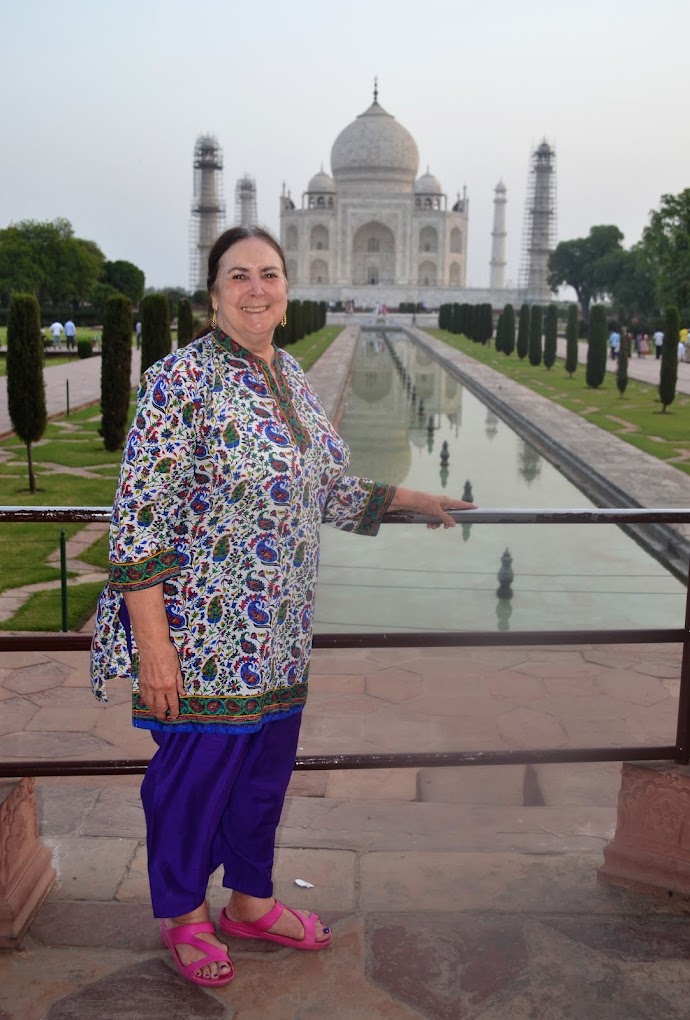
This is Joanne Olivieri, aka Poetic Shutterbug, wearing her own "Ruby Tuesday" shirt.

This is a teapot with a dragon and phoenix. I was unable to clearly photograph
any further identifying information.

This throne is from China, probably 1800 - 1880. It is made from lacquered wood.
Thrones were among the most important pieces of furniture in the Imperial house-
hold in Beijing. They were usually larger in scale and less restrained than regular
household furniture and were usually lacquered and decorated with auspicious
symbols. Some were decorated with gold and yellow ( the Imperial color ) and,
often had dragons and flowers.
This throne is smaller and may have been used for someone other than the
emperor himself.
I am participating in Ruby Tuesday! Check out the site for more
wonderful post and add one of your own!